
How to Calculate the Maximum Age Limit for a Home Loan
How to Calculate the Maximum Age Limit for a Home Loan | Buying a home is one of the most significant financial decisions you will ever make. When planning a property purchase through a home loan, most prospective buyers spend hours obsessing over the down payment size and hunting for the lowest interest rates. However, there is a crucial factor that often slips under the radar until the final moments of the bank application process: the applicant’s age.
Many people assume that as long as they have a stable job and a clean credit score, financial institutions will happily offer a 30-year repayment window. The reality on the ground tells a different story. The number on your identification card holds absolute power over how long you are allowed to repay your property, how high your monthly installments will be, and whether your home loan will be approved or rejected.
Understanding how your current age restricts your mortgage options is an essential first step. By mastering this calculation, you can craft a solid financial strategy and select a property that genuinely fits your financial capacity.
How Banks Calculate Your Age and Home Loan Tenor

Banking institutions are highly analytical when managing risk. When issuing long-term loans, a bank’s top priority is ensuring the borrower has a consistent financial capacity to pay off the debt until the very last statement. This is where the concept of retirement age and loan maturity age comes into play.
Generally, most home loan lenders strictly enforce a rule that the mortgage must be fully settled before the borrower enters retirement or old age. This maturity age cap typically ranges between 65 and 75 years old. The exact number varies depending on the bank’s internal policies, the borrower’s profession (salaried employee vs. self-employed), and local property regulations. In some countries with higher life expectancies, this limit can stretch up to 80 years, but the standard benchmark sits between 65 and 70.
The formula lenders use to calculate your eligible tenor is straightforward and mathematical:
Let’s break this down with real-world scenarios to see how aging directly cuts your timeline flexibility:
-
The Young Applicant (Age 30): If you apply for a mortgage at 30 and your chosen bank has a maturity cap of 70, you are in a highly advantageous position. Based on the formula, you qualify for a maximum tenor of up to 40 years (if offered by the bank), or you can easily opt for a standard 30-year term.
-
The Mid-Career Applicant (Age 45): The dynamic changes drastically if you approach a lender at age 45. With the same maturity age cap of 70, your maximum eligible tenor instantly shrinks to just 25 years ().
-
The Senior Applicant (Age 55): For those applying close to retirement, say at age 55, the room for maneuver becomes incredibly tight. The maximum time the bank will grant you to clear the debt is a mere 15 years ().
This compression of the repayment timeline triggers a massive domino effect on your monthly household expenses.
The Domino Effect on Installments and Financial Capacity
When the time available to repay a property shrinks, the financial burden distributed across each month naturally swells. This happens because the principal loan balance must be divided into fewer monthly chunks. There are two major consequences that older mortgage applicants will immediately face.
Higher Monthly Installments
Every month, your mortgage payment consists of two parts: principal repayment and interest. If you borrow the exact same amount of money as someone who is 15 years younger, you are forced to squeeze that repayment process into a much shorter window.
As a simple illustration ignoring interest, a one-billion-rupiah principal loan spread over 30 years distributes the burden comfortably. However, if that same loan must be cleared in 15 years, the principal amount due each month automatically doubles. This sudden spike in monthly payments can severely disrupt domestic cash flow if not anticipated properly.
Tighter Affordability Checks
Before signing off on an approval, bank credit analysts closely evaluate your Debt-to-Income (DTI) ratio. The golden rule is that your total monthly debt obligations—including the mortgage, credit cards, and auto loans—should not exceed 30% to 40% of your net monthly income.
The problem arises when your mature age compresses the tenor, forcing the monthly installment higher. As the payment amount shoots up, your DTI ratio climbs with it. If the percentage breaches the bank’s safety limit, you are flagged as a high default risk.
Consequently, the bank will not approve the full loan amount you requested. Instead, they will slash your credit ceiling. To buy that dream home, you would then have to come up with a much larger down payment out of pocket to bridge the gap.
Smart Workarounds to Navigate Age Restrictions

Applying for property financing later in life comes with structural hurdles, but it does not mean your dream of owning a new home is out of reach. The financial industry offers several legal mechanisms and tactical strategies to ease these tenor limitations.
Leveraging Co-Borrowing or Joint Income
One of the most effective escape routes from age constraints is adding a younger secondary applicant to your loan application. This process is commonly known as co-borrowing or joint-income KPR.
In practice, married couples can apply together. If the husband is 50 years old but the wife is 35, some lenders are willing to base the maximum tenor on the younger applicant’s age. Alternatively, this strategy can involve an adult child who has a stable, independent income. By shifting the benchmark age to the next generation, banks feel secure enough to grant a significantly longer tenor.
Using a Guarantor
If a joint application is not a viable option, another alternative is bringing in a third-party guarantor with a strong financial profile and a long remaining career horizon. The presence of a guarantor serves as a safety net for the lender.
If the primary borrower faces health issues or income reduction due to advanced age down the road, the guarantor is legally obligated to take over the remaining debt. A credible guarantor can often sway the bank’s credit committee to grant a special exception regarding the loan term.
Proving Post-Retirement Income Streams
The primary fear banks have regarding older borrowers is the sudden halt of cash flow once they leave traditional employment. If you can prove on paper that you possess an income ecosystem that outlasts your job, lenders will view you through a completely different lens.
Valid sources of post-retirement income include:
-
Regular rental yields from other fully-owned properties.
-
Substantial payouts from verified institutional pension funds.
-
Consistent dividend distributions or profits from passive business investments.
By presenting authentic proof of cash flow that does not rely on a monthly salary, you demonstrate to the bank that your financial capacity has no expiration date. Flexible financial institutions will happily adjust their age limits to onboard high-net-worth asset holders.
Conclusion and Strategic Takeaways
Age is not a definitive barrier that locks you out of property financing. However, ignoring the age variable when planning your home loan is a critical financial oversight. The older you are when stepping into a bank, the less time you have to clear the debt, and the more financial energy you must expend each month.
For those in their early career years, maximize this golden window to secure an optimal tenor that keeps your monthly commitments light, while maintaining the flexibility to make accelerated prepayments later. Meanwhile, for those applying at a more mature stage, the focus should shift toward preparing a larger down payment to shrink the loan principal, or utilizing a joint-income strategy to soften the bank’s age restrictions.
With precise calculations and the right mitigation strategies, you can secure a comfortable home without compromising the peace of your retirement years.
How to Use a Home Loan Calculator to Estimate Your Payments
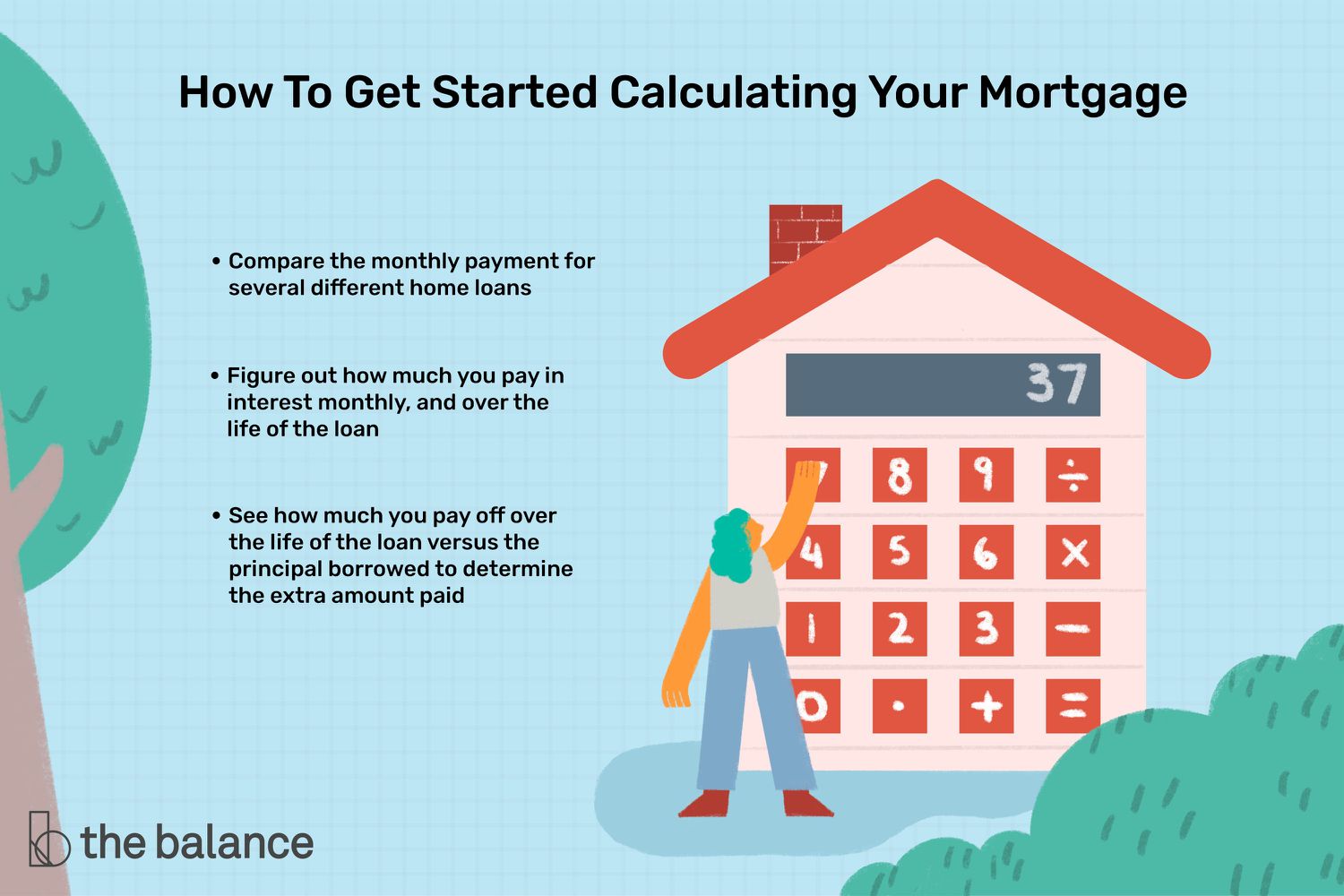
How to Use a Home Loan Calculator to Estimate Your Payments – Buying a home is an exciting milestone, but understanding the financial commitment can sometimes feel overwhelming. One of the easiest ways to get a clearer picture of your potential mortgage is by using a home loan calculator. These tools provide an estimate of your monthly payments, helping you plan your budget and make informed decisions. By knowing what to expect, you can approach the home-buying process with confidence and clarity.
What is a Home Loan Calculator?
A home loan calculator is an online tool that estimates your monthly mortgage payments based on factors such as loan amount, interest rate, loan term, and down payment. It can also factor in additional costs like property taxes and homeowners insurance, giving you a comprehensive view of what your monthly obligations might look like. While it doesn’t replace professional financial advice, a calculator provides a helpful starting point for planning and budgeting.
Using a calculator allows you to test different scenarios. For example, you can see how increasing your down payment, reducing your loan term, or adjusting the interest rate affects your monthly payments. This flexibility is invaluable when comparing loan options and understanding how small changes can make a big difference over time.
Why Using a Home Loan Calculator Matters
Understanding your potential mortgage payments is essential for making informed financial decisions. A calculator helps you avoid overextending yourself and ensures you choose a loan that fits your budget. It also allows you to plan for related expenses, such as property taxes, insurance, and maintenance, so there are no surprises once you move in.
Additionally, using a calculator can strengthen your position when negotiating with lenders. By knowing how different terms affect your monthly payments, you can confidently discuss rates, repayment options, and loan terms. It helps you approach the process strategically rather than relying solely on the lender’s guidance.
How to Use a Home Loan Calculator
Using a home loan calculator is straightforward, but it’s important to input accurate information to get reliable estimates. Here’s a step-by-step guide to using one effectively.
Step 1: Enter the Loan Amount
The loan amount is the total money you plan to borrow from the lender. It is usually the price of the property minus your down payment. For example, if the home costs $300,000 and you are putting down $60,000, your loan amount would be $240,000. Accurately entering this figure ensures the calculator provides a realistic estimate of your monthly payments.
Step 2: Input the Interest Rate
The interest rate is a key factor in determining your monthly payments. Even a small difference in rates can have a significant impact over the life of the loan. Be sure to use the current rate offered by your lender or a rate you are likely to qualify for based on your credit profile. Many calculators allow you to test different interest rates to see how they affect your payments.
Step 3: Choose the Loan Term
The loan term is the length of time you have to repay the mortgage, typically 15, 20, or 30 years. Shorter terms usually mean higher monthly payments but less interest paid over time, while longer terms reduce monthly payments but increase total interest. By adjusting the loan term in the calculator, you can find a balance between affordable monthly payments and minimizing total interest.
Step 4: Include Additional Costs
Some home loan calculators allow you to include property taxes, homeowners insurance, and mortgage insurance. These costs can significantly impact your monthly payments, so including them provides a more realistic estimate. Even if your calculator does not have this option, be sure to account for these expenses separately when planning your budget.
Step 5: Review and Adjust
Once you enter all the details, the calculator will provide an estimate of your monthly payment. Take time to review the result and experiment with different scenarios. For instance, increasing your down payment or slightly adjusting the interest rate can lower your payments. Testing different options helps you understand the flexibility you have and identify the most manageable mortgage for your situation.
Benefits of Using a Home Loan Calculator
Home loan calculators offer several advantages for prospective borrowers. They simplify complex calculations, allowing you to focus on other aspects of the home-buying process. They also help you:
-
Plan your budget accurately. Knowing your estimated monthly payments prevents overspending.
-
Compare loan options. Calculators allow you to see how different rates, terms, and down payments affect payments.
-
Negotiate with lenders. Being informed gives you leverage when discussing loan terms.
-
Reduce stress. Understanding your potential financial commitment makes the home-buying process less overwhelming.
By providing clarity and insight, calculators empower you to make decisions with confidence rather than relying on guesswork.
Tips for Maximizing Accuracy
While home loan calculators are useful, accuracy depends on the information you provide. Here are a few tips to get the most out of these tools:
-
Use realistic numbers. Base your inputs on actual quotes from lenders rather than estimates.
-
Factor in all costs. Don’t forget taxes, insurance, and potential maintenance expenses.
-
Check multiple calculators. Different calculators may use slightly different formulas, so comparing results can give you a more accurate range.
-
Update numbers regularly. Interest rates, property prices, and personal finances change over time, so recalculate if any key variables change.
When to Use a Home Loan Calculator
A home loan calculator is helpful at multiple stages of the home-buying process. Initially, it helps you set a budget and determine what price range you can afford. Later, it allows you to compare different loan offers and see how varying interest rates or terms affect your payments. Even after securing a mortgage, it can help you plan for refinancing options or paying off your loan faster.
Using a calculator early and often ensures you make informed decisions every step of the way. It’s a simple tool that can prevent costly mistakes and make your financial planning more precise.
Final Thoughts: Empower Your Home-Buying Decisions
Estimating your home loan payments is a crucial step in achieving a successful and stress-free home purchase. A home loan calculator provides a clear view of your potential monthly payments, helping you budget, compare loan options, and negotiate effectively with lenders. By entering accurate information and testing different scenarios, you can gain confidence in your decisions and choose a mortgage that aligns with your financial goals.
Whether you are a first-time homebuyer or an experienced investor, taking the time to use a home loan calculator ensures that you understand the full scope of your financial commitment. It’s a small step that can have a big impact on your long-term financial well-being, turning what might feel like a complicated process into an empowering and manageable experience.